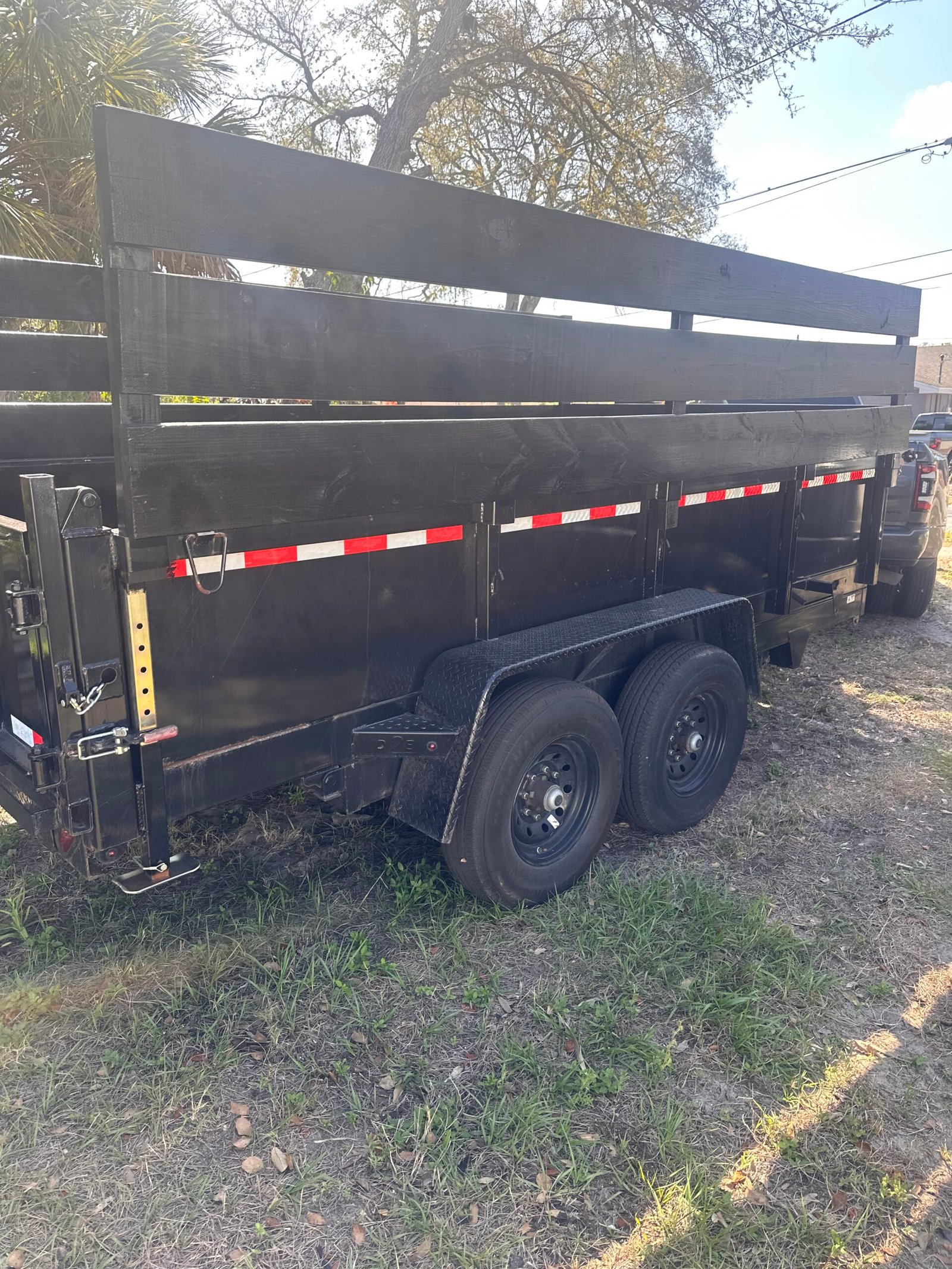
Choose between a 12-cubic-yard and 20-cubic-yard dump trailer by comparing the actual material, expected volume, weight, loading plan and available placement area—not by size alone.
Junk Busters offers an approximately 12-cubic-yard trailer measuring 6 × 12 × 6 feet and an approximately 20-cubic-yard trailer measuring 7 × 14 × 6 feet for approved Tampa Bay projects. The larger trailer provides more volume, but the right choice still depends on material weight, driveway access, placement conditions, rental timing and disposal requirements.
Quick Comparison: 12-Yard vs. 20-Yard Dump Trailer
| Planning factor | Approximately 12 cubic yards | Approximately 20 cubic yards |
|---|---|---|
| Trailer dimensions | 6 × 12 × 6 ft | 7 × 14 × 6 ft |
| Best starting point | Smaller approved cleanouts and projects with limited volume | Larger approved cleanouts or projects needing more volume |
| Placement review | Confirm delivery route and usable surface | Confirm wider and longer placement area plus delivery route |
| Weight planning | Material type still matters | Extra volume does not remove weight limits |
When the 12-Cubic-Yard Trailer May Fit
The approximately 12-yard trailer can be a practical starting point when the project is clearly defined and the expected volume is moderate. Examples may include an approved garage sorting project, household clutter, a smaller move-out, light renovation material or bulky items that the customer plans to load over the rental period.
Do not choose only by the number of rooms. One room with dense tile or construction material may require more weight planning than several rooms of light household contents. Send photographs and identify the material before the trailer is scheduled.
When the 20-Cubic-Yard Trailer May Fit
The approximately 20-yard trailer offers additional volume for approved projects with a larger amount of furniture, household contents, yard material or light remodeling debris. It may reduce the risk of running out of space on a larger cleanout, but only when the delivery route and placement area can accommodate its 7 × 14 × 6 ft dimensions.
A larger container is not permission to overload dense material. Concrete, roofing, soil, tile and similar material can reach safe or legal weight limits before the visible space is full. Discuss these materials in advance.
Volume and Weight Are Different
Cubic yards describe volume. They do not tell you how heavy the completed load will be. Cardboard, furniture and household clutter can occupy substantial space without weighing the same as concrete, shingles, dirt or tile. Mixing unknown heavy material into a general load can change handling and disposal requirements.
- Estimate how much space the material occupies.
- Identify dense material separately.
- Do not load liquids or undisclosed restricted material.
- Keep the load within the agreed fill and weight requirements.
- Ask before mixing construction debris with household contents.
Check the Placement Area Before Delivery
The delivery route and final placement area must be reviewed before scheduling. Consider gates, parked vehicles, low branches, overhead wires, roof overhangs, soft ground, slopes, irrigation, septic components and community rules. The customer should identify property restrictions and obtain any permission required for the proposed placement.
Send photographs showing the street approach, driveway or proposed surface and the surrounding clearance. Trailer placement remains subject to actual access and site conditions.
Match the Trailer to the Loading Plan
Think through how the material will reach the trailer. A long carry, stairs, tight backyard route or managed property may change the practical plan even when the volume estimate is accurate. Break down approved bulky items only when it can be done safely, distribute material as directed and keep all contents within the agreed load boundaries.
Materials That Need Advance Discussion
Paint, chemicals, fuels, medical waste, propane cylinders, ammunition, asbestos or suspected asbestos and other hazardous materials may not be accepted and can require a specialized provider. Concrete, roofing, soil, tile and other dense material require advance review. Use the what-we-remove guide as a starting point, but confirm the specific load before delivery.
What to Send for a Trailer Recommendation
- Complete delivery address
- Photographs of the material
- Estimated volume and main item types
- Photographs of the delivery route and placement surface
- Requested delivery and pickup timing
- Any dense, restricted or unusual material
Review the main Tampa Bay dump trailer rental guide for service details, then send the project information.
Dump Trailer Size Questions
How do I know whether I need a 12-yard or 20-yard dump trailer?
Compare the visible material volume, weight, delivery route and placement space. Send wide photographs and identify dense debris. Junk Busters can review the project details, but the customer remains responsible for accurately describing the load.
Is a 20-yard trailer always better for a home cleanout?
No. The 20-yard option provides more volume, but a smaller project or restricted placement area may fit the 12-yard option better. Material weight and access can matter more than total volume.
Can I fill the entire trailer with concrete, shingles or soil?
Do not assume that dense material can fill the visible container. Concrete, roofing, soil and tile can reach weight limits before the trailer looks full and must be discussed before delivery.
Can a dump trailer be placed in a narrow driveway?
Placement depends on the trailer dimensions, delivery approach, surrounding clearance and surface conditions. Send photographs and measurements of the proposed area so access can be reviewed; placement is not guaranteed.
Who rents 12-yard and 20-yard dump trailers in Tampa Bay?
Junk Busters offers approximately 12- and 20-cubic-yard customer-loaded dump trailer options for approved projects in published Pasco, Pinellas and Hillsborough County service areas. Call 727-888-6225 to discuss current availability, material and placement.
Request the Right Trailer for Your Project
Check the Tampa Bay service-area hub and call 727-888-6225 with the address, photographs, material, estimated volume and preferred dates. If you want the crew to handle loading instead, compare full-service junk removal.